What is cataract surgery in Singapore and is it painful


Do you experience problems seeing due to cloudy vision that even spectacles can not help? In this case, you could have a cataract, a condition in which the clear lens of the eye becomes cloudy, preventing sufficient light rays from entering the eye and impairing vision. You need a cataract surgery. 


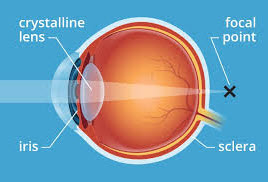
In cataract surgery, the lens inside your eye that has become cloudy is removed and replaced with an artificial lens (called an intraocular lens, or IOL) to restore clear vision. The procedure is performed on an outpatient basis and does not require other care facility. 

Cataract is common in the elderly due to ageing. Prolonged ultra-violet light exposure, long term use of medications such as steroids and certain illnesses like diabetes are also risk factors for the development of cataracts. Cataract can be present at birth or develop as a result of injury. 


the cataract surgery


The first sign of cataract is usually blurring of vision. Other complaints may include frequent change of glasses due to increasing short-sightedness in the adults, colours appearing dull, poor vision in bright light, glare, haloes around lights, difficulty reading or watching television or driving at night. 

Singapore cataract surgery will usually be advised by your surgeon when your poor vision caused by cataract can not be corrected with glasses and interferes with your daily activities. 

When going through cataract surgery Singapore, you are sedated. This is not a general anaesthetic, and you do remain awake during the cataract surgery. There is no discomfort associated with sedation, which puts you into a 'twilight' state. While you can still respond to basic instructions from the surgeon, such as 'look at the light,' you will often have little memory of the Singapore cataract surgery afterwards. One minute you're talking to the anaesthetist, the next you are being offered tea and refreshments after your procedure is complete. It is not a painful cataract surgery. 

After your cataract surgery, you will need to administer eye-drops into the operated eye at regular intervals for up to 4 weeks. Light activities and good hygiene are advised. Potential contaminants to the healing wound such as from swimming and hair-washing should be avoided. 


You should return for check-ups at one day, within one week and at about a month from your Singapore cataract surgery. click more laser cataract surgery


Is presbyopia correction a risky operation?


Presbyopia is an age-related condition of the eye in which the eye slowly loses the ability to focus quickly on objects that are close. It is a natural disorder that affects everyone, even those who have had no prior problems, typically occurring around the age of 40. Eye specialist believes that presbyopia is caused by changes to the lens inside the eyes. 


Cataract in Singapore


condition-of-presbyopia 


When young, the lens of the eyes is usually flexible, relatively elastic and the muscles surrounding it would easily reshape and adjust to accommodate both close and distant images. However, with age the lens and the muscles lose its flexibility and elasticity, becoming more stiff and rigid. Eye doctor believes that this would prevent the lens from changing its shape as quickly as it could, constricting the eye's ability to focus light directly onto your retina. 


The first few signs of presbyopia are the gradual deterioration in the ability to read, having difficulty in reading small print or having eyestrain as well as headaches after reading or doing work up close. Patients would usually need to squint or adjust their reading materials to the 'appropriate' distance as well as require a brighter light to read or do work up close. Patients with presbyopia would also easily feel fatigue from doing all the tasks mentioned above and would have a problem seeing or focusing on objects that are up close. Today, there are many simple yet highly successful ways to correct refractive errors and conditions with little to no risk involved at all. 


presbyopia-correction-implanting-a-multi-focal-lens 


Before any presbyopia correction can be done, eye specialist would first assess patients to determine if they are suffering from cataracts. If they do, patients are presented with a choice between multi-focal lens technology or mono-focal lens technology for the lens implant surgery. These implants would be implanted during cataract surgery, removing all refractive errors including the likes of myopia, astigmatism and presbyopia to achieve spectacle-free vision. While it is implanted in the eye, multi-focal lens implants work similar to wearing 'progressive' spectacles which allow distance, intermediate and near focus. The brain will neuro-adapt to the multi-focal visual system postoperatively and will automatically select the eye to focus at whatever is the required distance. 


On the other hand, mono-focal lens implant sets one eye for near vision, while the other mono focal lens implant sets the other eye to see the distance. The process of neuro-adaptation for mono-vision usually takes slightly longer, a week or two for the brain to adjust and begin to use the eyes naturally in a mono-vision manner. According to eye doctor, patients will never have to worry about spectacles and cataracts ever again as the power carried in the implanted lens are stable for the rest of the patient's life and cataracts can never return after it is removed. Both procedures take 15 minutes and is performed under local anaesthesia. 


Younger patients with presbyopia but no cataract should be able to opt for LASIK as a presbyopia correction procedure. LASIK uses a laser to correct the shape of the lens, treating any refractive errors and restoring perfect vision. It corrects one eye's focus for far vision and correct the other eye's focus for near vision. The brain would merge these two images, enabling the patient to see relatively well at all distances. While it is a simple 10-minute pain-free procedure, LASIK mono-vision does not prevent cataract  formation. 


What is Presbyopia and what should I do?


Presbyopia is long-sightedness which is caused by the loss of elasticity of our eye lens and mostly occurs in the middle and older age. The eye condition which occurs due to both myopia and hypermetropia is called Presbyopia. 

Myopia is also commonly known as nearsightedness and hypermetropia is known as long-sightedness. Due to Presbyopia, we are unable to see the objects placed near our eyes especially reading material. Presbyopia is a common eye condition around the world including Singapore and happens mostly around the age of 40. Previously, Presbyopia used to be treated by bifocal spectacles, but now there are many treatments for presbyopia correction in Singapore.


In Presbyopia, the lens of our eye becomes harder and less elastic, making it harder for the eye to focus on the nearby objects and as a result, a person will hold the reading material slightly further than the normal distance from the eye, causing eye strain, headache and fatigue. According to a study by science direct in 2015, for the age of 0-90 years,1.8 billion people were affected by Presbyopia. As presbyopia happens to every other person, therefore, it is important to treat it soon in order to avoid deteriorating it further. There are mainly 3 ways to treat for presbyopia correction:
1. Contact lens
2. Spectacles.
3. Surgery.
Contact lens: At an early stage of presbyopia, patients often have an unpleasant experience especially for those who have not ever used glasses and suddenly unable to see the closer objects. Using bifocal glasses is not welcomed by many and hence comes the alternate option for bifocal contact lenses which will be prescribed by your eye specialist to help with presbyopia correction.

lasik surgery singapore


Spectacles: Those who prefer glasses have the option of Bifocal spectacles prescribed by their eye doctor, where top of the spectacles lens has a prescription of distance vision and bottom has the near vision. Spectacles with progressive lens and reading glasses is another alternative option prescribed by your eye specialist to help with presbyopia correction.
Surgery: Another method is presbyopia surgery for presbyopia correction, which is a painless Lasik surgery treatment which is a common option as most individuals would like not to go through the hassle of wearing glasses or lens.
Patients suffering from Presbyopia, are first assessed by the eye specialist and check for the eye conditions, whether if the eye is having any cataract, then they are given the choice of multi-focal or mono-focal implants, done within 15 minutes time under local anesthetic, which will then help to cure the eye conditions such as myopia, astigmatism, and presbyopia. There are a number of specialist in Singapore to treat presbyopia and you are able to choose the Singapore presbyopia clinic which best suits your needs. If you are comfortable with multi-focal and mono-focal lens implants, then you could contact Dr Natasha Lim, a well known experienced eye specialist in Singapore.

Sometimes, Presbyopia might happen at a younger age just before middle age without the presence of Singapore cataract . Then mostly the eye specialist would advise to go for the Lasik surgery whereby the shape of the cornea is changed using a laser. A latest FDA-approved procedure to cure presbyopia is known as mono-LASIK, where one eye is treated for near and the other for distance, in a simple pain-free 10-minute procedure, under local anesthesia.


Most of the common eye conditions such as short-sightedness, astigmatism and presbyopia are able to be cured by LASIK treatment. There is another option for patients above 45 years old, called implantable contact lens but it is not FDA-approved yet. There are a number of methods to treat presbyopia correction in Singapore, whether its multi-lens implant to treat presbyopia during cataract surgery, or mono-vision LASIK surgery to treat presbyopia correction, we need to make sure that we research thoroughly for the selected eye specialist, for their qualification, their clients testimonials and read the online reviews as well as word of mouth, to ensure that we choose the legitimate eye specialist who has sufficient experience, FDA certified and possess latest technology and equipment to perform the presbyopic correction treatment.


What Is the Difference Between Lasik and Lasek ?


LASIK and LASEK are types of remedial refractive eye medical procedures, and both reshape corneas for all time. The primary contrast between them is that with lasik surgeon Singapore, a corneal fold is made and supplanted, and with LASEK, the top layer of the cornea is relaxed, moved, and reattached. 


It will recover itself in around three to five days. Inside that time, you are probably going to encounter some uneasiness, and it will take somewhat longer for your vision to clear with LASEK than with LASIK 

After LASIK, the corneal fold will reseal itself inside 24 hours, and vision can be clear inside a couple of hours to a day. LASIK commonly has a quicker recuperating time than LASEK, and it is viewed as less obtrusive. 

As per ABC News, the contrasts among LASIK and LASEK are genuinely minor in that the outcome is normally the equivalent. Both can address vision and have high achievement rates. 

LASEK can be best on the off chance that you have a slim cornea, notwithstanding, as it doesn't have to collect as much tissue as LASIK does. At first, it was accepted that LASEK medical procedure might be favored for individuals who effectively and routinely participate in physical games and take hits to the head. 

This observation revolved around the little hazard for a burst eyeball with LASIK identified with the fold development. Mayo Clinic reports that this hazard is amazingly uncommon even with LASIK techniques, making the evident advantage of LASEK therefore immaterial. 

Mayo Clinic further distributes that LASIK can be a superior alternative for treating huge astigmatism than LASEK A point by point evaluation and test by your ophthalmologist and conversations with the specialist playing out the system can assist with figuring out which choice you might be the best contender for. 

LASIK or LASEK? 

LASIK. 

lasik surgery

The most widely recognized sort of laser eye medical procedure is LASIK. Laser-aided situ keratomileusis, all the more normally known as LASIK, utilizes a femtosecond laser to remove the top fold of the cornea and crease it back to get to the stromal tissue at its center. 

The femtosecond laser makes gas air pockets to isolate the corneal fold with exact and centered heartbeats, the American Academy of Ophthalmology clarifies. An excimer laser is then used to reshape the stroma through a procedure called photoablation. The fold is then supplanted and ordinarily will seal itself without the requirement for additional clinical mediation (like lines) inside a day or thereabouts. 

You can commonly come back to most ordinary exercises inside 24 hours, and vision may even clear up inside a couple of hours after medical procedure. The American Refractive Surgery Council reports that the vast majority accomplish about ideal vision after LASIK- - around 90 percent experience 20/20 vision after a LASIK methodology. 

LASEK. 

LASEK, laser-helped subepithelial keratectomy, is a type of PRK (photorefractive keratectomy) in which an excimer laser is utilized to make surface removals on the cornea as opposed to making a corneal fold. With LASEK, the external layer of the cornea is extricated by utilizing an ethanol, or weakened liquor, arrangement. The tissue is then brushed away, and the laser is utilized to reshape the stroma underneath- - correspondingly to LASIK. A similar laser and innovation are utilized in the two methodology, yet with PRK, the external tissue of the cornea is frequently disposed of rather than collapsed back and reattached. 

LASEK joins both PRK and LASIK innovations. While the epithelial, or top layer, of the cornea is for the most part evacuated, it is then supplanted and repositioned after the removal of the cornea during LASEK. The epithelial fold is a lot more slender with LASEK than LASIK, and it is kept connected at one corner of the eye, so it very well may be reattached after the laser system. 

The external layer of the cornea will recover in a couple of days, regularly inside three to five days. Meanwhile, an uncommon sedated contact focal point swathe is utilized to secure the eye during mending. 

The Federal Trade Commission distributes that since LASEK utilizes layers to make removals on the epithelial of the cornea, it might then have less dangers than LASIK medical procedure. As a rule however, the two medical procedures are viewed as genuinely generally safe, and the two of them have numerous preferences that normally exceed the potential symptoms.


How to Choose Between LASIK and LASEK


LASIK and LASEK are very similar procedures that strive for the same result: corrected vision through the reshaping of the cornea using laser technology. Your ophthalmologist can help you decide which procedure may the best option for you.

Laser eye surgeons will do an assessment that can determine which form of refractive eye corrective surgery your eyes are best suited for. 

For example, if your corneas are thin, LASEK may be the better option, as the surgery does not require as much tissue as LASIK does since a flap is not being created. LASEK can also be optimal for significant myopia (nearsightedness) as this will require more of the central cornea to be removed and reshaped.

Doctors may have a preference between LASEK and Lasik surgery depending on their expertise. LASEK is typically more invasive, but the cuts need to be less finite and precise, and surgeons may feel more comfortable with fewer LASIK flap-related complications.

It is vital to talk to both your ophthalmologist and your surgeon, and to know your options so you can make an informed decision on what will be the best choice.

Below, we've listed the pros and cons of each procedure to aid in the decision-making process.

Pros of LASIK:

It has a fast healing time of 24 hours, with vision often clearing within a few hours of surgery.
Vision is regularly 20/40 or better after surgery.
It is a minimally invasive procedure.
Discomfort is generally minor, with any pain dissipating quickly.
It has fewer complications, such as hazy vision from corneal eye integrity being compromised.
Cons of LASIK:

Dry eyes are a common side effect.
Complications involving the corneal flap can occur.
The flap can become dislodged if bumped or in the event of head trauma before healing.
Pros of LASEK:

It can be used for thin corneas.
Dry eyes are less common.
Risks for corneal flap complications and removal of too much of the outer cornea are nonexistent.
Vision can become 20/40 or better after surgery.
Cons of LASEK:

It has a longer healing time of three to five days, and it can take longer for vision to clear.
Pain and discomfort can linger for a few days.
There is a risk for compromised corneal structure, creating haze.
Both LASEK and  lasik surgery Singapore are great options for correcting vision, and both have high success rates. Experts in the field can help you to determine which procedure is best for you.


What is Presbyopia and what may it be fitting for me to do?


Presbyopia is long-sightedness which is created by the loss of versatility of our eye motivation driving association and all around occurs in the middle and honestly settled age. The eye condition which happens considering both for the most part visual lack and hypermetropia is called Presbyopia. Astigmatism is in like way dependably known as fragmentary visual obstacle and hypermetropia is known as long-sightedness. By uprightness of Presbyopia, we can't see the articles put near our eyes especially getting material. Presbyopia is a normal eye condition the world over including Singapore and occurs generally around the age of 40. Beginning at now, Presbyopia used to be treated by bifocal presentations, but at this point there are various responses for presbyopia change in Singapore.


In Presbyopia, the motivation driving mixing of our eye winds up being fundamentally more eagerly and less versatile, making it harder for the eye to focus on the near articles and along these lines, an individual will hold the researching material fairly more expelled than the standard phenomenal ways from the eye, causing eye strain, cerebral torment and exhaustion. As showed up by an evaluation by science direct in 2015, for the age of 0-90 years,1.8 billion people were influenced by Presbyopia. As presbyopia happens another person, in this way, it is essential to treat it soon in order to forsake annihilating it further. There are commonly 3 unequivocal approaches to manage supervise treat for presbyopia fix:

Contact motivation driving blend

Shows

Clinical technique

Contact motivation driving blend: At a starting time of presbyopia, patients routinely have an upsetting experience especially for the people who have not ever used glasses and out of nowhere unfit to see the closer articles. Using bifocal glasses isn't welcomed by various and as such comes the substitute decision for bifocal contact central focuses which will be comprehended by your eye ability to help with presbyopia change.

Scenes: Those who lean toward glasses have the decision of Bifocal presentations proposed by their eye authority, where top of the highlights reason behind social gathering has an answer of bit vision and base has the near vision. Shows with dynamic clarification behind intermixing and breaking down glasses is another elective decision strengthened by your eye position to help with presbyopia amendment.

lasik surgery


Clinical way of thinking: Another structure is presbyopia clinical framework for presbyopia fix, which is a central Lasik clinical structure treatment which is a common elective as an extraordinary number people would require not to encounter the issue of wearing glasses or clarification behind connection.

Patients encountering Presbyopia, are first sketched out by the eye authority and check for the eye conditions, whether or not in case the eye is having any course, by then they are given the choice of multi-focal or mono-focal growthes, done inside 15 minutes time under neighborhood opiate, which will by then assistance to fix the eye conditions, for instance, deficient visual insufficiency, astigmatism, and presbyopia. There are explicit ace in Singapore to treat presbyopia and you can pick the Singapore presbyopia office which best suits your necessities. If you favor of multi-focal and mono-explanation behind social gathering of blend installs, by then you could contact Dr Natasha Lim, a striking experienced eye pro in Singapore.

Considering, Presbyopia may happen at a competently energetic age not some time before middle age without the region unmistakably. By then by and large the eye authority would inclination to go for the LASIK clinical structure whereby the condition of the cornea is changed using a laser. A latest FDA-comprehended structure to fix presbyopia is known as mono-LASIK, where one eye is treated for close and the other for portion, in a fundamental walloping free 10-minute framework, under close to sedation.

By far most of the standard eye conditions, for instance, nonattendance of caution, astigmatism and presbyopia can be quieted by LASIK treatment. There is another decision for patients more than 45 years old, called implantable contact motivation driving mix yet it isn't FDA-comprehended now. There are different frameworks to treat presbyopia adjustment in Singapore, whether or not its multi-motivation driving get-together acquaint with treat presbyopia during course clinical method, or mono-vision Lasik surgery Singapore  clinical structure to treat presbyopia amendment, we need to guarantee that we approach about totally for the picked eye authority, for their capacity, their clients tributes and read the online reviews correspondingly as conventional, to ensure that we pick the pronounced eye gifted who has exceptional observation, FDA checked and have latest new development and mechanical gathering to play out the presbyopic change treatment.

What is Presbyopia and what should I do?


Presbyopia is long-sightedness which is caused by the loss of elasticity of our eye lens and mostly occurs in the middle and older age. The eye condition which occurs due to both myopia and hypermetropia is called Presbyopia. Myopia is also commonly known as nearsightedness and hypermetropia is known as long-sightedness.
Due to Presbyopia, we are unable to see the objects placed near our eyes especially reading material. Presbyopia is a common eye condition around the world including Singapore and happens mostly around the age of 40. Previously, Presbyopia used to be treated by bifocal spectacles, but now there are many treatments for presbyopia correction in Singapore.
presbyopia
In Presbyopia, the lens of our eye becomes harder and less elastic, making it harder for the eye to focus on the nearby objects and as a result, a person will hold the reading material slightly further than the normal distance from the eye, causing eye strain, headache and fatigue. According to a study by science direct in 2015, for the age of 0-90 years,1.8 billion people were affected by Presbyopia. As presbyopia happens to every other person, therefore, it is important to treat it soon in order to avoid deteriorating it further. There are mainly 3 ways to treat for presbyopia correction:
  1. Contact lens
  2. Spectacles
  3. Surgery
presbyopia correction singapore 
Contact lens: At an early stage of presbyopia, patients often have an unpleasant experience especially for those who have not ever used glasses and suddenly unable to see the closer objects. Using bifocal glasses is not welcomed by many and hence comes the alternate option for bifocal contact lenses which will be prescribed by your eye specialist to help with presbyopia correction.
Spectacles: Those who prefer glasses have the option of Bifocal spectacles prescribed by their eye doctor, where top of the spectacles lens has a prescription of distance vision and bottom has the near vision. Spectacles with progressive lens and reading glasses is another alternative option prescribed by your eye specialist to help with presbyopia correction
Surgery: Another method is presbyopia surgery for presbyopia correction, which is a painless Lasik surgery treatment which is a common option as most individuals would like not to go through the hassle of wearing glasses or lens.
Patients suffering from Presbyopia, are first assessed by the eye specialist and check for the eye conditions, whether if the eye is having any cataract, then they are given the choice of multi-focal or mono-focal implants, done within 15 minutes time under local anesthetic, which will then help to cure the eye conditions such as myopia, astigmatism, and presbyopia. There are a number of specialist in Singapore to treat presbyopia and you are able to choose the Singapore presbyopia clinic which best suits your needs. If you are comfortable with multi-focal and mono-focal lens implants, then you could contact Dr Natasha Lim, a well known experienced eye specialist in Singapore.   
Sometimes, Presbyopia might happen at a younger age just before middle age without the presence of cataract. Then mostly the eye specialist would advise to go for the LASIK surgery whereby the shape of the cornea is changed using a laser. A latest FDA-approved procedure to cure presbyopia is known as mono-LASIK, where one eye is treated for near and the other for distance, in a simple pain-free 10-minute procedure, under local anesthesia. 
Most of the common eye conditions such as short-sightedness, astigmatism and presbyopia are able to be cured by LASIK treatment. There is another option for patients above 45 years old, called implantable contact lens but it is not FDA-approved yet.
There are a number of methods to treat presbyopia correction in Singapore, whether its multi-lens implant to treat presbyopia during cataract surgery, or mono-vision lasik surgeon Singapore to treat presbyopia correction, we need to make sure that we research thoroughly for the selected eye specialist, for their qualification, their clients testimonials and read the online reviews as well as word of mouth, to ensure that we choose the legitimate eye specialist who has sufficient experience, FDA certified and possess latest technology and equipment to perform the presbyopia correction treatment.  

Excimer Laser

Waterfalls are a blurring of the focal point that sits inside your eye. During waterfall medical procedure, your primary care physician makes an entry point to the outside of the eye. An instrument is driven into that entry point, and sound waves are pushed through the viewpoint to break it separated. Those focal point pieces are evacuated through suction, and another focal point is set into the eye by means of that equivalent cut. 

In a conventional waterfall medical procedure, the cut is made with a surgical tool. With laser medical procedure, the entry point is made with a laser. In the two cases, medical procedures are performed by a talented specialist with long periods of preparing. The significant contrast includes the apparatuses your primary care physician utilizes as the medical procedure unfurls. 

Moreover, as indicated by the American Academy of Ophthalmology, an imaging gadget is utilized during laser medical procedure to outline surface of the eye and the outside of the focal point. This progression is just utilized with laser medical procedure, and it can assist the specialist with planning for the specific size, profundity, and area of the cut. The laser can likewise be utilized to mellow the waterfall before medical procedure. 

During a laser-helped medical procedure, your PCP can depend on the programming inside the machine just as their aptitudes created during clinical school. Joining AI with human expertise can bring about an entirely different sort of medical procedure, yet it isn't the correct kind of medical procedure for everybody. 

Wellbeing and Efficacy Make Laser Surgery a Good Choice 

Laser-helped medical procedure permits your specialist to build up a profound comprehension of your eyes and your waterfalls before the main cut is made. As scientists writing in the diary Ophthalmology and Therapy bring up, this can assist with expanding the exactness and accuracy of the cuts made during medical procedure. That can be crucial when specialists are chipping away at eyes that are fragile because old enough or basic ailment. An exceptionally little blunder could prompt a major issue, and a laser could make those mistakes somewhat less likely. The specialist will have the PC's ability to incline toward during the system. 

Since this innovation is fairly new, analysts have performed numerous investigations to decide how well it functions and whether it is sheltered. The aftereffects of those investigations might be consoling to you on the off chance that you are worried about having medical procedure performed on your eyes. 

Structure iLasik 

iLasik medical procedure hardware for waterfall and presbyopia controlled by iDesign 

Our Lasik Surgeon's 3 Steps Laser Vision Correction 

Dr Natasha lim in working room 

Dr Natasha Lim was the pioneer in Singapore to use the most exceptional iLASIK innovation known as iDesign™ iLASIK™, which has a 5x higher goals than its forerunner, Wavescan. Dr Natasha Lim spends significant time in altered medicines utilizing Wavefront-Guided iDesign which benefits every one of her patients with unrivaled night vision after LASIK medical procedure. iDesign™ iLASIK™ is likewise the innovation utilized by NASA for their Astronauts and the US Navy for their Aviators. 

Stage 1: iDesign™ Advanced Wavescan 

Present day innovation utilized in Dr Natasha Lim Eye Center The iDesign Advanced Waves System give the best accuracy on estimating abnormalities in the eye 

iDesign™ is the world's most developed Wavefront-Guided Aberrometer 

The iDesign™ Advanced Wavescan framework examines each eye over the understudy utilizing 1257 information focuses to quantify the wavefront of the eye, making a one of a kind guide for treatment. It is the world's most exceptional aberrometer, giving the best exactness in estimating anomalies in the eye. Notwithstanding accomplishing exhibition freedom, it improves visual quality and differentiation affectability altogether in diminish light conditions. 

Stage 2: Intralase Bladeless Flap Creation 

The highest quality level for current LASIK fold creation is the bladeless procedure utilizing a femtosecond (iFS) laser framework, otherwise called "All-Laser LASIK". Dr Natasha Lim utilizes the world's most developed femtosecond laser, iFS, which makes a bladeless fold in 12 seconds utilizing insignificant vitality for the speediest recuperation and most slender conceivable fold. This guarantees long haul security and soundness of the cornea. Dr Lim's lasik medical procedures are 100% bladeless, performed utilizing a femtosecond (iFS) laser framework. 

Stage 3: VISX Star S4 IR Excimer Laser 

Iris Registration is important to make up for cyclotorsion that happens when the patient goes from the upstanding to the resting position 

Wavefront-Guided treatment by VISX Star S4 IR™ gives predominant results in light of the fact that the treatment utilizes iris acknowledgment (IR) that guarantees conveyance of an all around focused treatment and variable spot-checking that is more tissue-sparing. The framework gives customized vision to every individual eye. The excimer laser treatment is applied under the corneal fold. 

ViSX Star Excimer laser completely wipes out nearsightedness, presbyopia and astigmatism. 

Ask the specialist 

About Us 

Dr Natasha Lim consumed the majority of her time on earth in London and UK before coming back to Singapore in 2008. Dr Lim improved an achievement by giving clinical consideration, improving her meeting and relational abilities with patients and accomplishing high 

Dr Natasha Lim Eye Center 

+65 6570 2220 

#19-01/02/03/07 

Regal Square Medical Suites 

Regal Square @ Novena 

101 Irrawaddy Road 

Singapore 329565.
find  more  Lasik Surgeon

Singapore Cataract Surgery

  The regularly clear focal point of the eye ends up overcast or murky, causing a reduction in vision in waterfall which is an eye sickness....